Buying Korean Sunscreen in Seoul: A Smarter Guide to SPF, Versions and Value
Published 23 October 2026 · Seoul Price Check
The sunscreen aisle is where a Seoul beauty-shopping trip can become confusing fastest. A familiar name may appear in several versions, a Korean tube may not match the one sold in the United States, and the product with the most appealing texture is not necessarily the one best suited to swimming or outdoor sport.
The useful question is not “Which Korean sunscreen is best?” It is “Which sunscreen will I actually use correctly, and am I comparing the same formula in both countries?”
Start with protection, not popularity
A sunscreen should have clearly stated UV-protection information on its own packaging. SPF describes relative protection against sunburn-causing ultraviolet exposure; it does not tell you how many hours you can stay outside. The US FDA explains the distinction. In the US, the FDA’s “broad spectrum” label means the product has passed a test for UVA as well as UVB protection. Other markets use different labeling conventions, so don’t assume a Korean PA marking and a US broad-spectrum label are interchangeable certifications.
A light facial sunscreen can be pleasant for commuting and ordinary sightseeing. For a beach day or a sweaty hike, check the specific product’s water-resistance claim rather than inferring resistance from the word “sport,” a high SPF, or a glossy advertisement. The FDA’s sun-safety guidance recommends reapplication at least every two hours outdoors, and more frequently after swimming or sweating. Sunscreen complements shade and protective clothing; it does not replace them.
Four ways to narrow the shelf
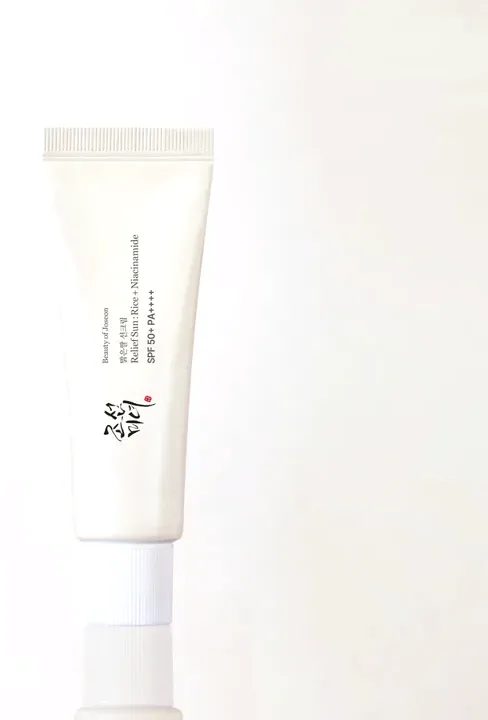
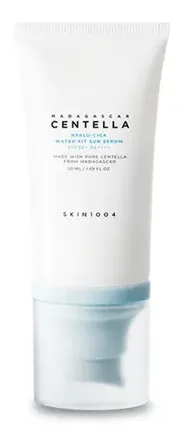
A comfortable daily finish. Beauty of Joseon Relief Sun: Rice + Probiotics and SKIN1004 Hyalu-Cica Water-Fit Sun Serum are useful starting points when you want to compare everyday facial formats. Check the exact product name on the box; don’t buy solely from a brand’s reputation.
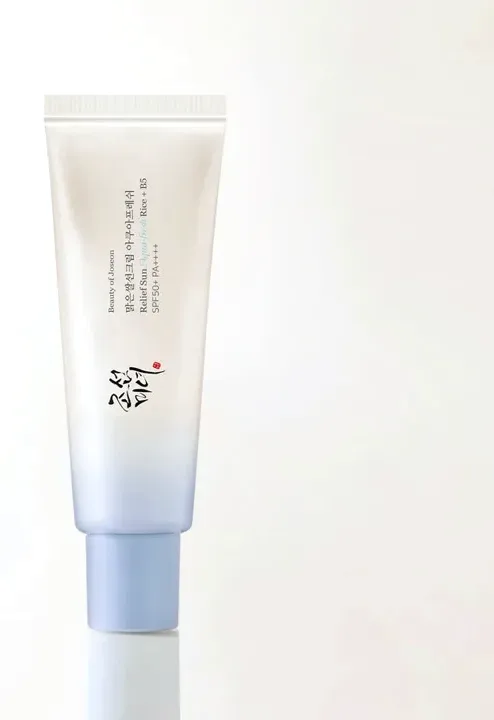
A lighter-feeling alternative. Beauty of Joseon Relief Sun Aqua-Fresh is a separate product from the original Relief Sun. Treat them as different SKUs, not as interchangeable prices for the same tube.
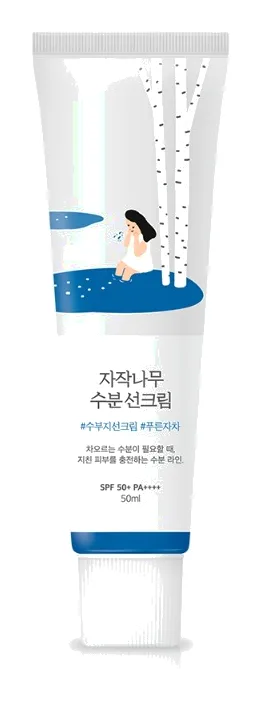
A different finish or format. Round Lab Birch Juice Moisturizing Sun Cream and Isntree Hyaluronic Acid Watery Sun Gel belong in the same shopping comparison, but each must be checked for its current regional label and formulation.
A different filter preference. Dr.G Green Mild Up Sun+ is another candidate to compare if you want to explore a different sunscreen feel. Verify its active filters from the package rather than treating “mild” as a guarantee that it cannot irritate skin.
These are comparison candidates, not a ranked list of tested favorites. Seoul Price Check does not claim to have personally worn or tested them.
The export-version trap
A tube with the same brand name can be reformulated for another country. Sunscreen is especially sensitive to market-specific rules because it is regulated differently across jurisdictions. The safest comparison is the exact Korean product against the exact export product: same full name, size, filter system and package edition. If those details don’t line up, a cheaper price is not a clean saving.
This matters for search results. A US retailer may show an unfamiliar label, a different ingredient list, or an updated version while the Korean listing still uses an older photograph. A product page should say “not comparable” rather than quietly divide two prices and announce a winner.
Compare the real cost
Check the displayed Seoul checkout price, whether the item is a single tube or a promotion pack, and the dated US or UK offer. Compare per 50 ml or per 100 ml only after confirming that the products are actually equivalent. Add shipping and applicable tax on the overseas side. A tourist refund is conditional; don’t count it as guaranteed cash.
Use My Seoul Haul to compare several verified items together. If a home-market price is missing or the formulation differs, leave that comparison out of your claimed savings.
At the shelf: a 30-second test
Read the full name. Check SPF and the market’s UVA label. Look for water-resistance instructions if that matters for your trip. Compare the size and expiry information. Then decide whether you want a sunscreen for your daily routine or for more demanding outdoor use.
A sensible purchase: the tube you can verify and will reapply. A poor purchase: three versions of a viral sunscreen whose labels you never checked.
Frequently asked questions
Is Korean SPF50+ automatically better than US SPF30?
No. SPF is a protection measure, not a quality ranking or a measure of wearability. Correct application, UVA protection, water resistance where needed and reapplication matter.
Can I compare Korean and US sunscreen prices by brand name alone?
No. Confirm exact formulation and pack size first. If they differ, show the difference rather than claiming a like-for-like saving.
Does a dewy finish mean a sunscreen is less protective?
Finish alone does not establish tested UV protection. Follow the product’s labeled instructions and protection claims.
What if I have sensitive skin?
Read the complete ingredient list and introduce a new product cautiously. Marketing terms such as “gentle” do not guarantee compatibility with every person.
Sources: FDA SPF explanation; FDA sunscreen and sun-safety guidance. Product examples are catalog entries, not independently tested endorsements.